
UDL in Therapy: Meeting Neurodivergent Clients Where They Are
Universal Design for Learning was built for classrooms. Its principles translate directly into more accessible, effective therapy for neurodivergent clients.
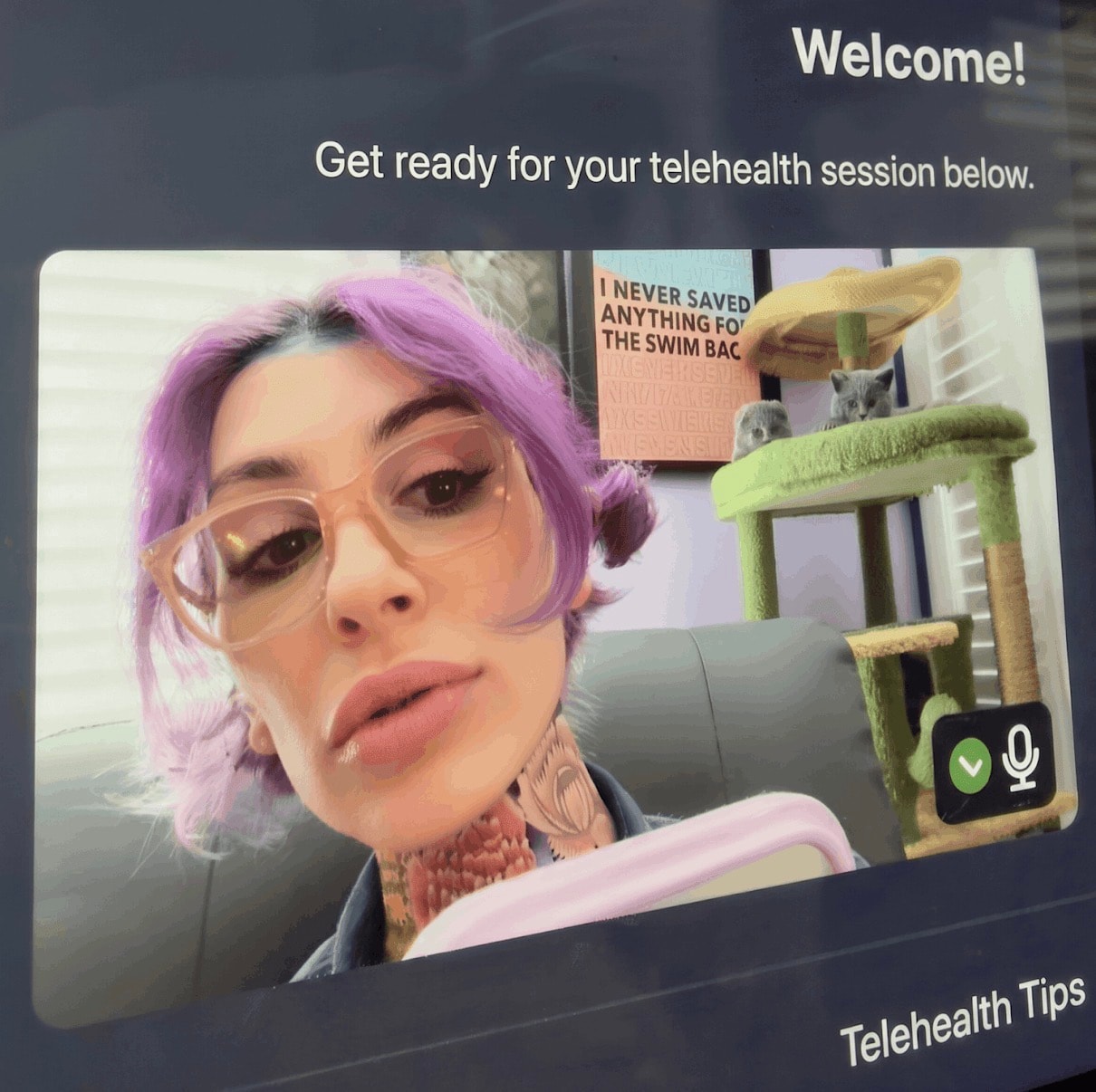 By Mx. Love C. Dialogos, LMFT · AAMFT Approved Supervisor
Universal Design for Learning (UDL) began as an educational framework. Its premise is simple: when you design for the people who are hardest to reach, you build something better for everyone. Ramps serve wheelchair users and parents pushing strollers. Captions serve Deaf viewers and anyone watching in a noisy room. Good design builds a system that adapts to people instead of asking people to adapt to it.
Therapy has been slow to apply this logic. The standard clinical frame (fifty minutes, face to face, verbal exchange, the same room every week) was designed around a particular kind of nervous system. It works reasonably well for people whose nervous systems match that design. For many neurodivergent clients it doesn't, and the mismatch gets misread as resistance or a lack of motivation.
UDL offers a different frame. The question shifts from why isn't this client adapting to therapy? to how do we design therapy so it reaches this client?
The UDL Principles, Applied Clinically
UDL is built on three principles: multiple means of engagement, multiple means of representation, and multiple means of action and expression. Each one carries over into clinical practice.
Multiple Means of Engagement
Engagement is the why of learning: what motivates people and supports self-regulation. In therapy, it is what makes the work feel safe and worth doing.
For neurodivergent clients, the standard frame can create engagement barriers that have nothing to do with motivation to change. A client with sensory sensitivities may find fluorescent lighting or waiting-room noise dysregulating before the session starts. A client with demand avoidance may experience the implicit expectation to talk on command, and to produce insight on schedule, as activating. A client with ADHD may find fifty minutes of unstructured conversation harder to stay present in than a session with explicit structure and room to move.
Applying UDL here means asking what this client needs to feel safe enough to engage. That might mean sessions that include walking, or the option to communicate in writing. It might mean naming the session's structure at the start, or checking in about pacing more often. It might mean being flexible about what "showing up" looks like.
Multiple Means of Representation
Representation is the what of learning: how information is presented and made accessible. In therapy, it covers how the clinician communicates and how the client is supported in making sense of their own experience.
Many therapeutic approaches are heavily verbal and abstract, and insight is expected to arrive as articulated understanding. For clients who think in images, who have alexithymia, or who find abstract emotional language confusing rather than evasive, that creates a real barrier.
In practice, multiple means of representation might look like visual tools, such as timelines or parts maps, alongside verbal processing. It might mean written psychoeducation the client can review between sessions, or concrete language in place of abstract emotional vocabulary. Often it means simply asking how the client prefers to receive information.
It also means thinking about how you reflect the client's experience back to them. Reflections in the client's own words and sensory language are more accessible than ones that translate their experience into clinical abstraction.
Multiple Means of Action and Expression
Expression is the how: how a client shows what they know and feel and what they are working on. In therapy, it is how the client is invited to participate.
The standard expectation is verbal: the client talks and the therapist listens. For many neurodivergent clients that isn't the most natural mode. Some communicate more fluently in writing or process better through movement. Others find it easier to express themselves through art, or by talking about a character in a book or game whose experience mirrors their own.
Applying UDL here means widening what counts as therapeutic expression and not treating non-verbal communication as a problem to solve. It means offering options (we could talk this through, or you could draw it, or we could map it out together) instead of defaulting to the mode the clinician is most comfortable with.
What This Looks Like in Supervision
For supervisees working with neurodivergent clients, UDL is a useful supervisory lens. When a case feels stuck, one of the first questions to ask is whether the client is failing to engage with therapy or the therapy is failing to engage the client.
That reframe changes the inquiry. Instead of asking what's wrong with the client's motivation, we ask what the therapeutic frame is demanding of the client's nervous system, and whether that demand is necessary or just habit.
Supervision can also apply UDL to the supervisory relationship itself. Neurodivergent supervisees benefit from the same flexibility their clients do. A supervisory relationship that is explicit about structure and flexible about format, and curious about how the supervisee learns best, teaches those principles better than any amount of didactic instruction.
A Note on Affirmation
UDL in therapy is a practical framework and also an affirming stance. It tells neurodivergent clients that their way of being in the world isn't a problem to fix. The therapy is designed to meet them, and they don't have to perform neurotypicality to get support.
That message, that you don't have to be different to be here, is often the most therapeutic thing a clinician can offer. UDL is one way to build it into the structure of the work instead of leaving it as rhetoric.
Interested in supervision that integrates neurodivergence-affirming and UDL-informed practice? Learn more about supervision services or reach out to connect.
Explore Topics
Written by
Mx. Love C. Dialogos
Mx. Love C. Dialogos (they/them) is a queer, genderless womxn, Licensed Marriage & Family Therapist, and AAMFT Approved Supervisor offering queer-affirming clinical supervision for LMFT-Associates across 15 U.S. states via telehealth. They write about queer-affirming clinical practice, supervision, and the intersection of Buddhist Psychology and therapy.


