
When Clients Disclose Sexual Abuse: A Guide for Pre-Licensed MFTs
What to do clinically and ethically when a client discloses sexual abuse in session. A practical guide for MFT associates handling disclosure for the first time.
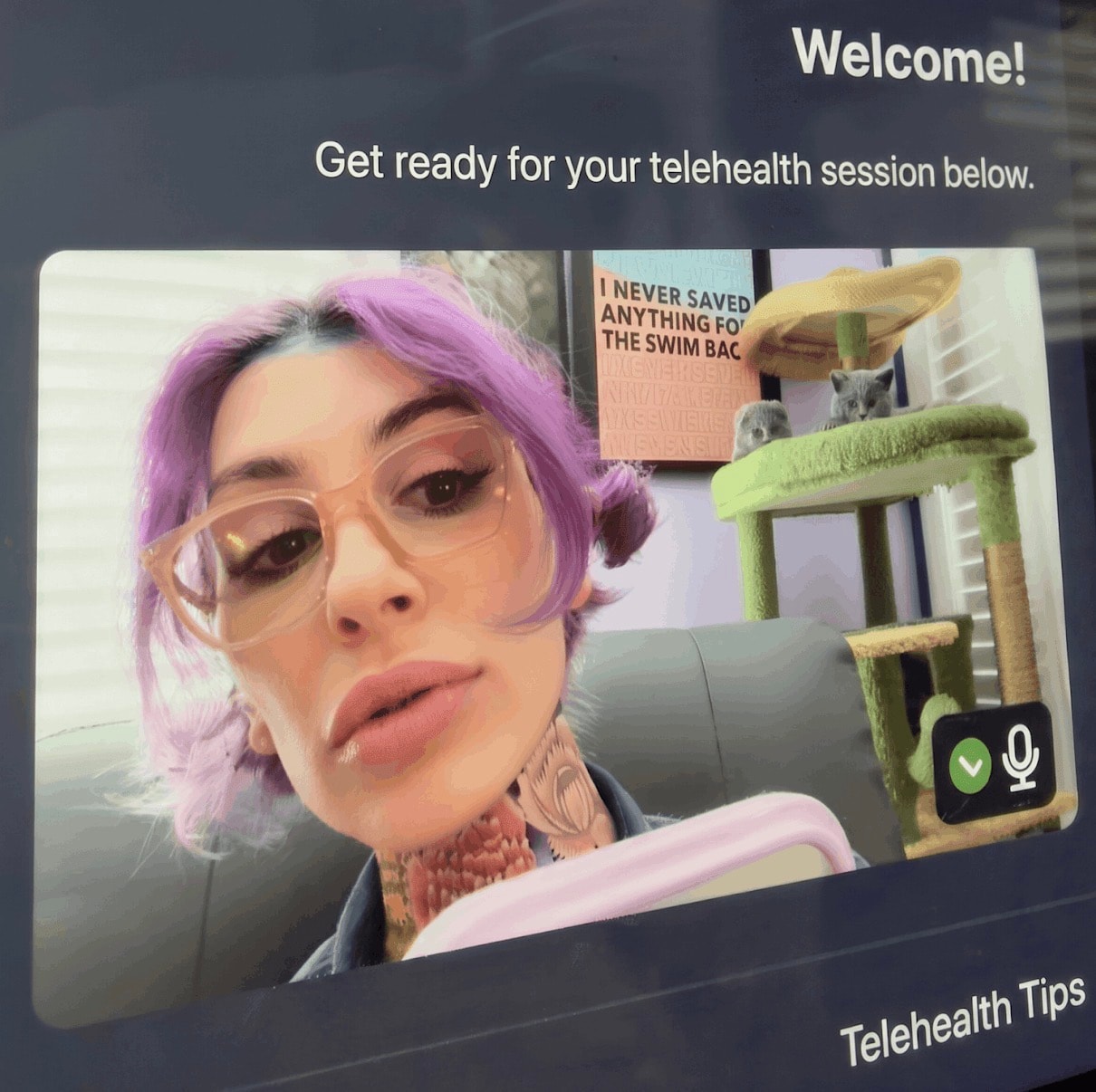 By Mx. Love C. Dialogos, LMFT · AAMFT Approved Supervisor
The first time a client discloses sexual abuse in session, you will feel it in your body before your clinical training kicks in.
There is a pause, sometimes a long one, where you are holding what they just said and trying to stay present. You are trying to remember what you're supposed to do while keeping your own reaction from becoming something they have to manage.
This is normal, and it doesn't mean you are unprepared. You are sitting with something that deserves to be felt.
You also have a clinical job to do. For pre-licensed MFTs, that job is complicated by the fact that you are still building your clinical instincts and working under supervision. This post covers what the job looks like in practice.
What "Disclosure" Means
Disclosures vary. Some clients come in intending to tell you something specific. Others disclose indirectly: a reference to "something that happened when I was a kid," a comment that trails off, or a physical response to a topic that says more than their words.
Some disclosures are about the past and some about the present. Some involve abuse that is ongoing, or a person who caused harm and is still in the client's life. Some involve someone who has died.
The clinical response differs in each case. The first step is the same in all of them: stay present and regulated, and let the client set the pace.
In the moment of disclosure, your job is not to gather information or work out whether you have a reporting obligation. That comes later. Your job is to receive what the client is offering without making them regret offering it.
The Immediate Clinical Response
Your first response shapes what follows, including whether the client keeps disclosing and whether they feel safe enough to do the deeper work trauma recovery requires.
What helps:
- Slow down. Literally slow your speech and your movements.
- Reflect back what you heard without adding interpretation. "You're telling me that happened to you."
- Say you're glad they told you. "I'm really glad you felt safe enough to share that with me."
- Ask what they need right now. Not what happened next or how long it went on, but what they need right now, in this room.
- Follow their lead on detail. Some clients want to tell the whole story immediately. Others need to set it down and come back to it. Both are valid.
What doesn't help:
- Showing shock or distress the client has to manage. ("Oh my god, that's terrible.")
- Pivoting straight to logistics. ("Okay, I need to ask you some questions.")
- Minimizing or normalizing. ("That happens to a lot of people.")
- Asking for details you don't clinically need in that moment.
- Promising what you can't promise. ("Everything is going to be okay.")
Mandatory Reporting: What You Need to Know
This is where things get complicated for pre-licensed MFTs, and where supervision becomes essential.
Mandatory reporting laws vary by state, including what triggers a report and the timeline for making one. As an MFT associate you are almost certainly a mandated reporter, and the specifics depend on where you are licensed and where you practice.
The general framework:
Most states require a report when there is reasonable suspicion of:
- Abuse or neglect of a minor
- Abuse of a dependent adult or elder
Some states also have duty-to-warn or duty-to-protect provisions for imminent danger to an identifiable person.
Historical abuse of an adult, meaning abuse that happened in childhood and is now disclosed by an adult client, generally does not trigger a reporting obligation in most states unless the person who caused harm currently has access to children.
"Generally" isn't "always," and this is the kind of nuance supervision exists for.
Before you do anything else, contact your supervisor.
Don't make a reporting decision alone or assume you know your obligation. If the disclosure raises any question of current danger, don't wait for your next scheduled session. Call your supervisor.
That is what supervision is for, and using it reflects competence.
After the Session: What to Bring to Supervision
When you bring a disclosure to supervision, be ready to discuss:
- The content of the disclosure: what was disclosed, about whom, and whether it is current or historical
- Your response in the moment: what you said and what you noticed in yourself and in the client
- Your assessment of current risk: Is there ongoing abuse? Is a minor currently at risk? Is the person who caused harm still in the client's life?
- Your reporting questions: what you think your obligation is, why, and what you're unsure about
- The therapeutic relationship: how the disclosure affected the alliance, what the client seemed to need, and your plan for the next session
Good supervision on a disclosure covers more than the legal and ethical questions. It also helps you process what you experienced in that session, because unattended countertransference will affect your clinical work.
The Therapeutic Work After Disclosure
Once the immediate clinical and ethical questions are handled, the longer work begins.
Trauma treatment is a specialized area. As a pre-licensed MFT, be honest with yourself and your supervisor about your training. If a client's trauma presentation is beyond your current skill, that calls for more training or a referral, not shame.
There is still meaningful work you can do with survivors without specialized trauma training:
Stabilization and safety. Before any trauma processing, clients need to feel safe in the therapeutic relationship and in their daily lives. This foundation is within the scope of most pre-licensed MFTs.
Psychoeducation. Helping clients understand trauma responses, like why certain things trigger them or why their memory of an event may be fragmented, can be deeply normalizing.
Relational repair. For many survivors of sexual abuse, the therapeutic relationship is part of the healing. A relationship with someone consistent and boundaried who stays present is reparative in its own right.
Coordination with other providers. Survivors often benefit from a team that may include psychiatry and somatic work. As the therapist, you may be the one coordinating it.
A Note on Queer and Trans Clients
For LGBTQ+ clients, sexual abuse carries additional layers to hold in supervision and in the work.
Queer and trans people experience sexual violence at higher rates than the general population. They also face specific barriers to disclosure: fear of not being believed, fear of homophobia or transphobia from providers, fear that their identity will be used to explain away the abuse, and sometimes fear that disclosing will out them.
For trans clients, there are further complexities around body dysphoria and the overlap between sexual violence and gender-based violence, along with the ways medical and legal systems have failed trans survivors.
Affirming supervision means holding all of that context along with the clinical presentation.
Bringing It Back to Supervision
If you are a pre-licensed MFT with a client who has disclosed sexual abuse, bring it to supervision: the clinical and ethical questions, the reporting questions, and your countertransference.
If your supervisor can't hold all of those, treating mandatory reporting as the only relevant question or missing the experiences of LGBTQ+ survivors, reflect on that.
You deserve supervision that can meet the full complexity of your clinical work.
Mx. Love C. Dialogos is an LMFT and AAMFT Approved Supervisor offering queer-affirming clinical supervision via telehealth. Licensed in Wisconsin, Illinois, New York, Texas, Florida, Arizona, Ohio, Michigan, Indiana, New Mexico, Hawaii, Idaho, and Alaska. request a session to talk about your supervision needs.
Related Reading
- Countertransference When Working with Queer Clients: What Supervision Should Address
- Trauma-Informed Supervision: Supporting Pre-Licensed MFTs Working with Abuse Survivors
- Safety Planning with IPV Clients: A Clinical Framework for Pre-Licensed Therapists
- Mandatory Reporting for MFT Associates: What You're Required to Do
- How to Choose a Queer-Affirming MFT Supervisor
- Ethical Dilemmas in MFT Supervision
Explore Topics
Written by
Mx. Love C. Dialogos
Mx. Love C. Dialogos (they/them) is a queer, genderless womxn, Licensed Marriage & Family Therapist, and AAMFT Approved Supervisor offering queer-affirming clinical supervision for LMFT-Associates across 15 U.S. states via telehealth. They write about queer-affirming clinical practice, supervision, and the intersection of Buddhist Psychology and therapy.


